
Capping Machine & Dosing Cup Placement: A Practical Guide to Multi Head
Vial Capping, Lug Capping and High Speed Automatic Dosing
Walk to the end of almost any filling line and you'll find the two stations that quietly decide whether a batch passes or fails at final inspection: the capper and, on many liquid and syrup lines, the dosing cup placement station. Everything before this point can be perfect — accurate fill volume, clean containers, correctly printed labels — and it still won't matter if the cap isn't torqued right or the measuring cup isn't seated properly.
That's why manufacturers rarely treat capping as a generic, one-size-fits-all purchase. A vial needs a completely different capping approach than a wide-mouth glass jar, and a syrup bottle that ships with a dosing cup needs its own dedicated placement logic. Get the technology mismatched to the container and cap, and you end up with cross-threading, loose seals, or cups that pop off during transit.
At Brothers Pharmamach, we build capping machines and dosing cup placement systems around the container and cap format first, then scale them to the output speed the line actually needs. Here's what we think manufacturers should know before choosing a system.
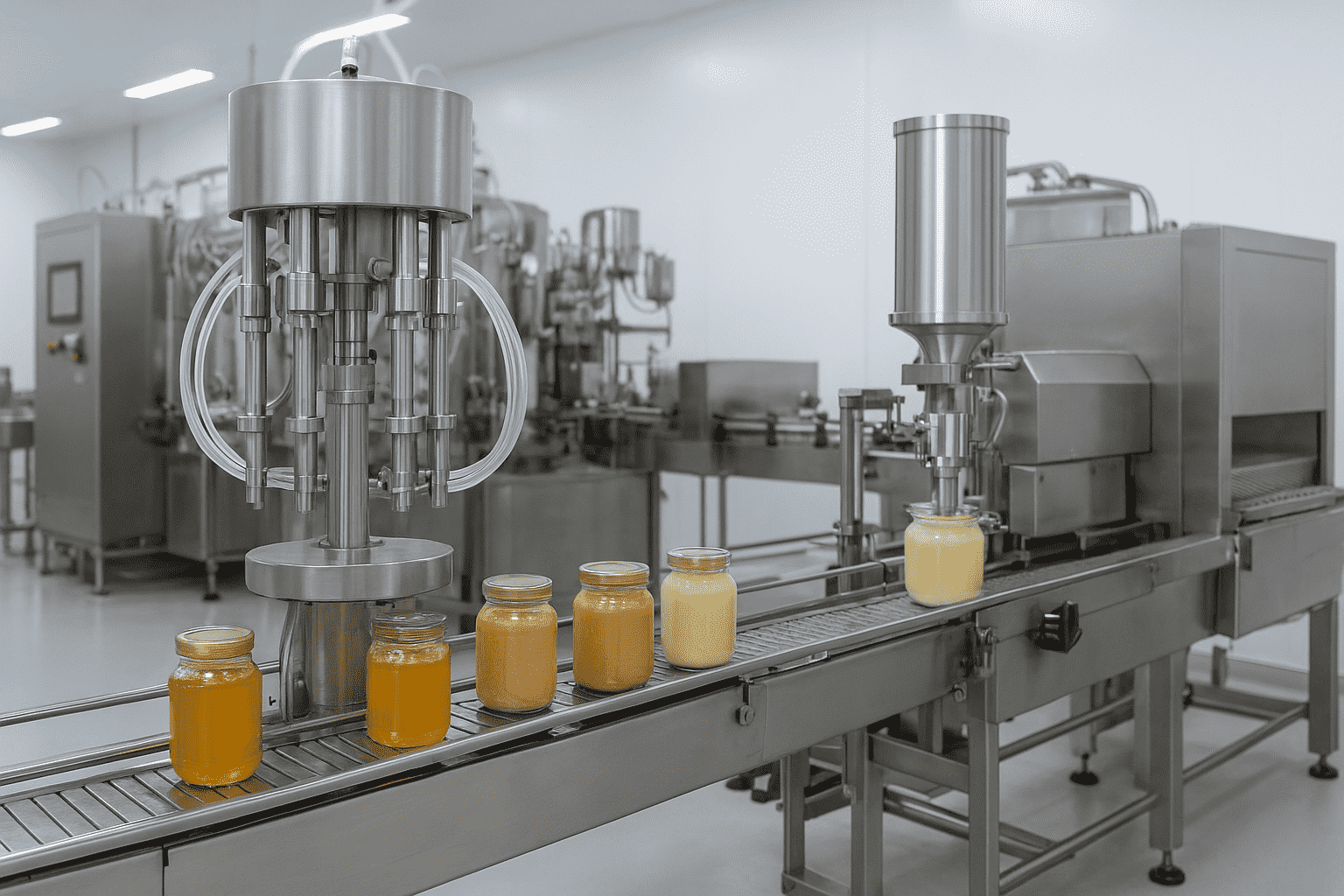
Why Capping Deserves as Much Attention as Filling
It's tempting to think of capping as a simple mechanical step — screw a cap on, move to the next station. In practice, torque variation, cap deformation, and misaligned seating are among the most common reasons finished packs fail quality checks or leak in transit. A vial capped too loosely risks contamination; a jar lug-sealed unevenly loses vacuum and spoils faster than expected.
Manual or semi-automatic capping compounds the problem, because torque applied by hand varies operator to operator and shift to shift. An automated capping machine removes that variability by applying the same controlled pressure and rotation to every single container, whether it's the first unit of the shift or the ten-thousandth.
What a Capping Machine Actually Does
Strip away the jargon and the concept is simple: a Capping Machine picks up a cap, aligns it with the container neck, and applies the exact rotation and downward pressure needed to seat and seal it — without stripping threads, crushing the container, or leaving the cap loose.
How consistently it does this depends on the technology behind it. Multi-head designs use several synchronized capping stations working in parallel to sustain high line speeds. Lug-style systems rotate and press in a controlled arc to match the lug pattern on glass jars. Every format is synchronized with conveyor speed so accuracy doesn't drop as output rises.
Choosing the Right Type of Capping Machine
Every production line has a different container, cap style, and volume target. Picking the right capping technology depends on all three, plus how much room you have for future expansion.
Multi Head Vial Capping Machine
A Multi Head Vial Capping Machine is built for injectable, syrup, and diagnostic vial lines where torque consistency is non-negotiable. Multiple synchronized heads pick, place, and tighten caps in parallel, while rubber-lined chucks protect delicate vial necks from damage. Servo-driven torque control keeps every seal inside a tight, repeatable tolerance, run after run.
Lug Capping Machine
Lug caps are the standard choice for glass jars carrying sauces, food products, and pharmaceutical formulations, because they create a strong, tamper-evident vacuum seal. Our Lug Capping Machine rotates and presses the cap through a controlled arc so each lug engages the jar thread evenly — avoiding cap deformation and delivering a reliable seal on every jar.
Lug Cap Sealing Machine
Closing a jar and sealing it properly aren't always the same thing. Our Lug Cap Sealing Machine applies calibrated pressure and rotation together to form a hermetic seal that holds vacuum and resists loosening in transit — a critical requirement for hot-fill and heat-processed food products.
Dosing Cup Placement: The Step Manufacturers Underestimate
Many liquid medicines and syrups ship with a measuring cup fitted onto the bottle cap or neck. It's a small component, but placing it correctly and consistently at speed is its own engineering problem — one that manual placement solves poorly and inconsistently.
Dosing Cup Placement Machine
Our Dosing Cup Placement Machine automatically orients, picks, and seats the measuring cup onto each container, removing manual placement errors and keeping line speed consistent through the capping and secondary packaging stages.
Linear Measuring Cup Placement
For lines that need a compact, in-line footprint, our Linear Measuring Cup Placement module fits directly into the bottle's straight-line flow. It vibratory-feeds, orients, and drops the cup onto each container without interrupting throughput — an easy retrofit into existing linear filling and capping lines.
Measuring Cup Placement Machine
Our standalone Measuring Cup Placement Machine is built for manufacturers who need a dedicated station for accurate, high-repeatability cup fitting, whether feeding from bulk hoppers or pre-sorted trays. Sensor-based verification confirms every cup is correctly seated before the pack moves downstream, cutting rejects at the quality checkpoint.
Scaling Up: High Speed Automatic Dosing
When production volumes climb, manual or semi-automatic dosing becomes the bottleneck that holds the rest of the line back. Our High Speed Automatic Dosing systems combine servo-controlled feeding with continuous-motion capping and cup placement, sustaining consistent output without sacrificing accuracy — built for pharma, nutraceutical, and food production lines running around the clock.
Key Features to Look for in a Modern Capping & Dosing System
Manufacturers should evaluate equipment on long-term performance, not purchase price alone.
- Servo-driven torque and cap-placement control
- PLC control with touchscreen HMI
- Automatic cap and cup synchronization with conveyor speed
- No Cap – No Container / No Cup – No Container detection
- Sensor-based seating verification
- Quick changeover between container and cap sizes
- GMP-compliant stainless steel construction
- Low maintenance operation
- Easy integration with filling, labelling, and inspection machines
Industries That Depend on Precision Capping and Dosing
- Pharmaceutical Manufacturing
- Nutraceutical Industry
- Food & Beverage Processing
- Cosmetics & Personal Care
- Chemical Manufacturing
- Healthcare Products
- Consumer Goods Packaging
Common Mistakes When Selecting a Capping Machine
- Ignoring future production expansion
- Selecting machines with limited container or cap compatibility
- Choosing equipment that cannot match production line speed
- Overlooking after-sales support and spare parts availability
- Using non-GMP equipment for pharmaceutical production
- Treating dosing cup placement as an afterthought rather than a dedicated station
Why Choose Brothers Pharmamach?
Brothers Pharmamach manufactures advanced capping machines and dosing cup placement systems that combine precision engineering, intelligent automation, and GMP-compliant construction to meet the demanding requirements of modern manufacturing.
Our range includes Multi Head Vial Capping Machines, Lug Capping Machines, Lug Cap Sealing Machines, along with Dosing Cup Placement Machines, Linear Measuring Cup Placement modules, Measuring Cup Placement Machines, and High Speed Automatic Dosing systems — configurable as standalone stations or as part of a complete filling-capping-labelling line.
Beyond machine manufacturing, we provide installation, commissioning, operator training, technical consultation, and responsive after-sales support to help customers maximize production efficiency.
The Future of Capping and Dosing Technology
Industry 4.0 continues to reshape packaging automation. Modern capping and dosing systems now feature predictive maintenance, production monitoring, remote diagnostics, and intelligent performance analytics that reduce downtime and improve overall equipment effectiveness.
A well-chosen Capping Machine and dosing cup placement system plays a vital role in improving packaging quality, production efficiency, regulatory compliance, and brand presentation. Whether your line needs a Multi Head Vial Capping Machine, a Lug Capping Machine, a Lug Cap Sealing Machine, or a High Speed Automatic Dosing system, selecting the right solution can significantly enhance manufacturing performance.
At Brothers Pharmamach, we deliver innovative capping and dosing solutions backed by precision engineering, reliable automation, and expert technical support. Our goal is to help manufacturers build faster, smarter, and more efficient packaging lines that deliver consistent quality and long-term operational success.
Recent Blog
- Capping Machine & Dosing Cup Placement: Multi Head Vial, Lug Capping and High Speed Automatic Dosing
- Sticker Labelling Machine: A Practical Guide to Choosing the Right Labelling Solutions
- How to Choose the Right Automatic Sticker Labelling Machine
- How to Choose the Right Pharmaceutical Packaging Machine Manufacturer in India
- Food & Beverage Packaging Machines: Round vs. Square Bottle Considerations
- Pharma & Healthcare Bottles: Choosing the Right Filling & Labelling Equipment
- Advanced Liquid Filling Machines for Viscous and Semi-Viscous Products
- Powder Filling Machine for Pharma Product – Accurate, Hygienic & Efficient Packaging Solution
- Label Applicator Machine for Pharmaceutical Packaging
- Inspection Machine Solutions for Pharmaceutical Packaging Excellence
- Lubricant & Pesticide Bottles: Advanced Filling and Labelling Automation Solutions
- Sticker Labelling Machine: A Practical Guide to Choosing the Right Labelling Solutions
- Top Mistakes to Avoid When Selecting Bottle Packaging Machines
- Revolutionizing Labeling: The Power of Wet Glue Labeling Machines
- Efficient and Accurate: The Advantages of Sticker Labeling Machines
- Precision Filling: Optimizing Dry Syrup and Powder Packaging
- Ensuring Quality and Efficiency: Capsule Filling Machine Solutions
- The Future of Pharmaceutical Packaging: Smart Automation, AI & Sustainable Manufacturing

 ×
×